
Dr. med. Jan Lennart Stalp
Junior Clinician Scientist
Clinic for Gynecology and Obstetrics
HANNOVER MEDICAL SCHOOL
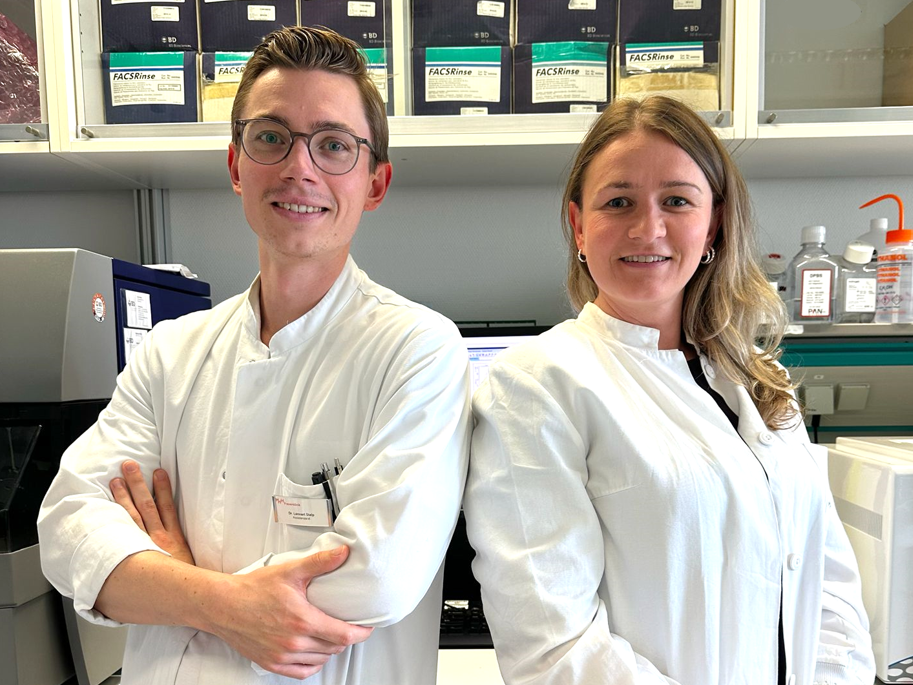
The collaboration of Dr. med. Jan Lennart Stalp – Junior Clinician Scientist at the Clinic for Gynecology and Obstetrics, Hannover Medical School – and Dr. rer. nat. Ivana Kutle – Translational Scientist at the Institute for Experimental Hematology, Hannover Medical School – started in 2023 through an initiative of their superiors. What began as a sample-sharing collaboration quickly developed into a close scientific partnership built around a common goal: translating innovative immunotherapies into meaningful benefits for patients with gynecological cancer.
Since spring 2025, the two-year national Translational Tandem Program for Gene- and Cell-based Therapies (nTTP-GCT) has been funding the two researchers for their joint project “Harnessing primary gynecological cancer samples to identify new tumor antigens for next-generation cell therapies” and enabling them to intensify their collaboration.
In this interview, Dr. Stalp and Dr. Kutle tell us about the initial challenges they faced in their collaboration, as well as the significant benefits and the impact of their joint work on translation and patient care.
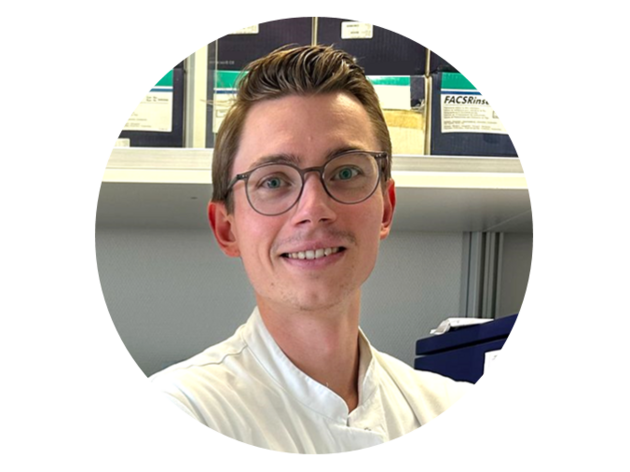
As an experimental scientist with extensive expertise in tumor biology, in vitro modeling, immunology, and the development of CAR-NK cell therapies, Ivana is trained to think broadly about complex biological questions, explore different hypotheses, and consider multiple mechanisms that may contribute to a disease or therapeutic response. This allows her to identify innovative opportunities, test them preclinically, and evolve a deep understanding of the underlying biology.
Ivana usually provides the needed experimental setup to my clinically grounded ideas. If I have something in mind that would benefit the clinic, she is capable of quickly building the experimental plan and methods to evaluate whether or not my idea might bring the project forward or work at all. Due to her broad skills in the field of gene and cell therapy she is able to use nearly every method to make things work.

Lennart’s clinical perspective provides direct insight into patient needs, current treatment limitations, and the realities of medical decision-making. He is particularly skilled at identifying which questions are most urgent from a clinical standpoint and how research findings could translate into patient benefit.
The combination of our perspectives allows us to look at the same challenge from different angles and develop research strategies that are both scientifically ambitious and practically meaningful. I see our collaboration as a balance between breadth and focus. My approach helps ensure we capture the complexity of the problem and consider innovative solutions, while Lennart’s perspective helps prioritize the aspects most relevant to clinical application. Ultimately, it helps us bridging the gap between discovery and translation, increasing the likelihood that our work will make a real difference for patients.
When we started our collaboration, I regularly provided Ivana with samples and tried to gather as many as possible. Since I wasn’t really familiar with the protocols, I had no clue how much work one sample would make and how long Ivana would have to stay to process it. I still feel sorry for the weeks when I provided several samples in short time spans and late during the day.
And I still remember how much Ivana's working hours had surprised me. I was used to start early, due to surgeries and outpatient clinic, therefore I came to the lab early, too. I noticed that Ivana’s workday was often structured differently than what I was used to. Ivana has a completely different work rhythm than I do: She usually starts her workday later, since she doesn’t reach her most productive phase until later in the day, and as a result, she regularly works into the evening. In the meantime, I nearly adapted for the lab days to her work schedule.
Our different day-to-day priorities definitely were a challenge at the beginning. Laboratory research is often driven by experimental timelines and depends on the availability of primary patient samples, whereas clinical work follows the demands of patient care and a highly structured schedule. These different perspectives require flexibility, open communication, and mutual understanding. Over time, we learned to align our workflows, adapt to each other's routines, and view these differences as complementary strengths rather than challenges.
One of my biggest “aha” moments during our first year was realizing how naturally the clinical and experimental perspectives complement one another. Many of our discussions started with a clinical observation or an unmet patient need and quickly evolved into research questions that could be explored in the laboratory. Just as often, experimental findings generated new clinical questions and opened fresh avenues for discussion. One particularly memorable example emerged during the gene expression analysis of a patient-derived tissue sample that had initially been included as a healthy control in our target identification studies. To our surprise it turned out to be derived from malignant tissue. This showed again how molecular data, clinical insights, and scientific expertise could come together to reveal a more complete picture. It also confirmed to me that translational research is not a one-way path from bench to bedside, but a continuous exchange between clinicians and medical scientists.
Although our collaboration had already begun before entering the nTTP-GCT, the program provided an ideal framework to strengthen our partnership, e.g. due to the secured 'protected time' for our research project.
Ivana taught me a lot of my experimental skills concerning protocols and methods for gene and cell therapy and I wouldn’t be able to perform the translational experimental work without her. Therefore, every scientific step forward that I or we did, was only possible since we worked so closely together as a tandem.
I am convinced that our progress toward our shared goal of translating innovative scientific findings into meaningful clinical benefit would not have been as successful had we based our work solely on our clinical or experimental perspective.
I fully agree. Besides, we established a unique biobank of patient-derived ovarian and cervical cancer samples by combining direct access to patient material with expertise in tumor immunology and CAR-NK cell therapy. The comprehensive clinical and molecular characterization of these samples has provided a valuable platform for identifying novel therapeutic targets and evaluating innovative immunotherapies in clinically relevant models.
Together we have generated new collaborative projects, contributed to scientific publications, and laid the foundation for future translational studies. These are all results of our strong working relationship that we have developed over time.
I am convinced that our progress toward our shared goal of translating innovative scientific findings into meaningful clinical benefit would not have been as successful had we based our work solely on our clinical or experimental perspective.
Our different perspectives help us bridge the gap between discovery and translation, increasing the likelihood that our work will make a real difference for patients.

